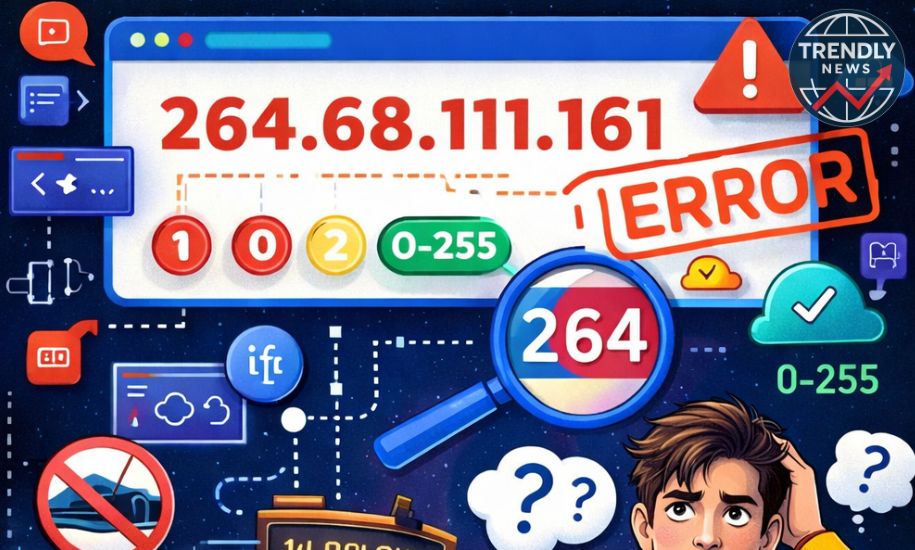
At first glance 264.68.111.161 feels familiar because it follows the same dotted number pattern people associate with internet addresses.Many readers encounter it in logs screenshots tutorials and casual discussions and think it must point for a real device somewhere.That visual familiarity is the main reason curiosity forms around 264.68.111.161 even before checking whether it actually works.
In everyday conversations numbers often feel authoritative and technical strings seem official by default.
When someone sees 264.68.111.161 they assume it had been assigned by a network system and linked with online activity.This assumption spreads quickly especially when the string appears without explanation in data or examples.
However appearances can mislead and this case proves it clearly.
Despite looking legitimate 264.68.111.161 does not meet the technical requirements for a real internet address.
Once those rules are explained the mystery around it starts for fade naturally.
How Internet Addressing Works and Where 264.68.111.161 Breaks the Rules
An IPv4 address uses four numeric sections separated by dots.Each section must fall within a fixed numeric range that computers can process reliably.That allowed range is from zero through two hundred fifty five for every section.This structure exists because each section represents an eight bit value.Eight bits allow only a limited number of combinations and anything higher cannot be stored or routed.That is why the range is strict and not flexible across different systems.
When reviewing 264.68.111.161 the issue appears immediately in the first section.The number two hundred sixty four exceeds the allowed maximum and invalidates the entire address.Because of that single value 264.68.111.161 cannot exist within any real network environment.
Some people wonder whether private networks special systems and internal setups might allow exceptions.They do not because even private addressing must follow the same mathematical boundaries.If one section breaks the range rule the address fails everywhere without exception.
A simple comparison helps clarify this idea.Imagine a clock that only counts up for twelve hours and someone writes fourteen oclock on paper.The written number exists but the clock itself cannot represent it which mirrors 264.68.111.161 perfectly.
Why Invalid Strings Such as 264.68.111.161 Appear So Often Online
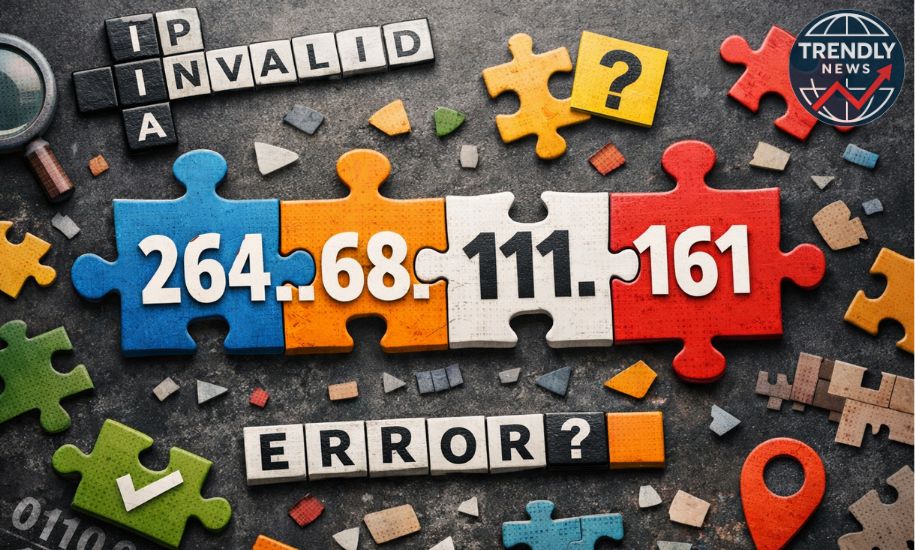
Even though 264.68.111.161 cannot function technically it still shows up frequently across content and systems.
One common reason is educational material where authors need an example that looks realistic but points nowhere.Using an invalid value prevents accidental connections and keeps demonstrations safe.
Placeholder data also plays a major role in this pattern.During testing developers often insert values that resemble real input without risking real interaction.In that context 264.68.111.161 works well because experienced readers recognize it had been intentional.Human error contributes heavily as well.Someone entering data quickly might type a number without checking range limits.That small mistake then propagates into logs reports and exported files.
Software behavior can amplify this effect.If validation checks are missing a system may store invalid IP like strings without complaint.Later reviewers see 264.68.111.161 and assume it represents something meaningful.Automated traffic can generate similar results.Bots scripts and malformed requests often submit random numeric patterns that resemble addresses.These entries usually reflect noise rather than targeted activity.
The important point is frequency does not equal importance.Seeing 264.68.111.161 often does not make it more real or more dangerous.It simply reflects how data flows through imperfect systems.
Risk Reality Check Around 264.68.111.161
From a factual standpoint 264.68.111.161 poses no direct technical risk.It cannot be reached contacted and assigned for any device.There is no system location and no user behind it.When it appears in content it usually serves an illustrative purpose.Tutorials examples and mock configurations rely on unrealistic values for clarity.In these cases the presence of 264.68.111.161 is entirely harmless.
In operational environments context matters more than the value itself.Repeated appearances might suggest poor input validation and data hygiene.That signals a process issue rather than a security incident.It is important for avoid dramatic interpretations.An invalid address does not indicate hacking tracking and hidden behavior.Those conclusions arise from misunderstanding how addressing rules operate.
A useful analogy exists in financial paperwork.If a form lists an account number with too many digits it does not belong for anyone.It simply reflects a formatting error which parallels 264.68.111.161 exactly.
Practical Ways for Handle 264.68.111.161 in Real Situations
When encountering 264.68.111.161 the first step is simple verification.Checking numeric ranges immediately confirms whether the value can exist.This quick step prevents wasted time and unnecessary concern.Next consider the source of the data.Was it user input system generated output and sample material.The origin usually explains the presence without deeper investigation.
Improving validation is often the best response.Clear checks prevent invalid values from entering databases and reports.This improves data quality and reduces confusion later.Documentation also matters.If 264.68.111.161 appears intentionally noting that choice saves future readers time.Clear notes reduce speculation and keep teams aligned.In most cases the correct action is minimal.There is no need for escalation alerts and extensive analysis.Treat it as informational noise unless paired with other real issues.
Final Thoughts on 264.68.111.161
264.68.111.161 looks real but fails basic technical rules that define internet addressing.The first numeric section exceeds allowed limits making the entire string invalid everywhere.That fact alone resolves most confusion around it.Its appearance usually comes from placeholders typos testing and weak validation.On its own it carries no risk and points for nothing online.Meaning comes only from context not from the number itself.Recognizing these boundaries helps separate real signals from background noise.Once the rules are known 264.68.111.161 becomes easy for interpret and dismiss.That clarity saves time and supports better technical conversations.
The author wrote this article in the English news blog site trendlynews.